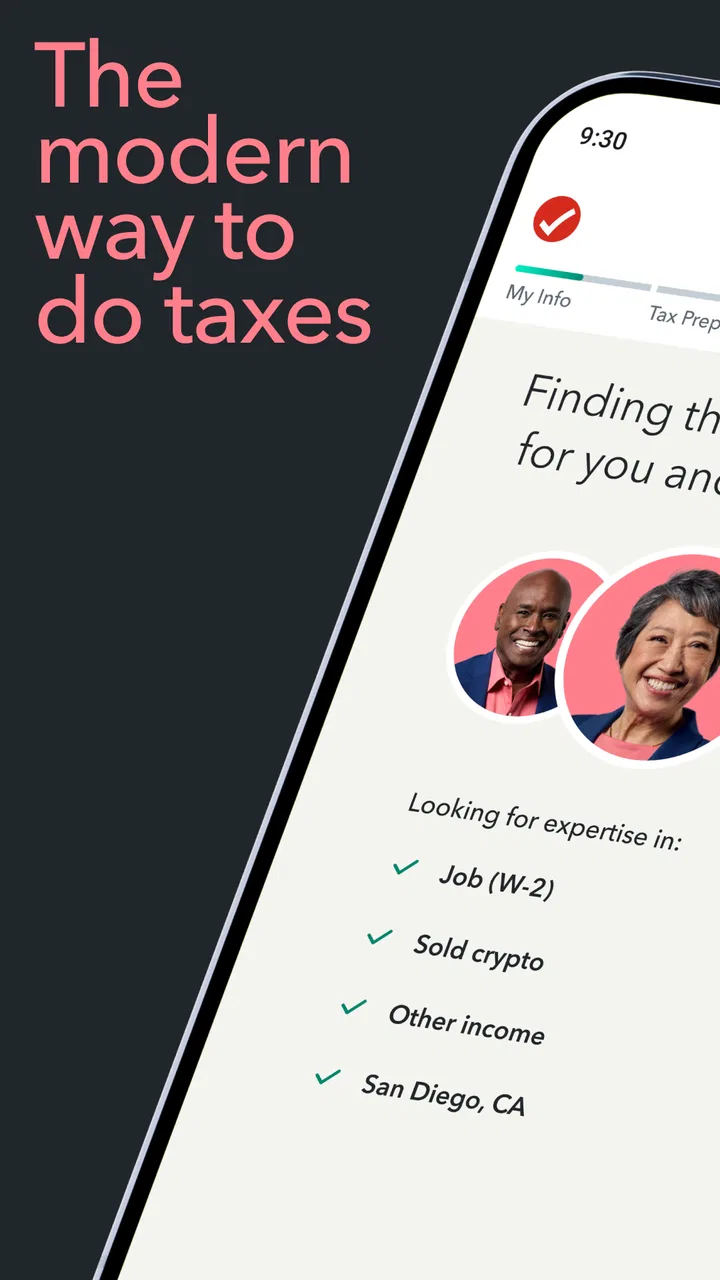
TurboTax: File Your Tax Return
- 4.0
- Rating
- 10.00M
- Installs
- Free
- Price

 Analysis by App-foxy
Tax filing is rarely something people look forward to, so an app that promises to make the process less intimidating has an obvious first-week appeal. I spent time with TurboTax: File Your Tax Return to see whether it feels useful beyond the initial setup, not just whether it can guide someone through a return. My overall impression is that it is a polished finance app from Intuit Inc that works best for people who want a guided path rather than a blank form, although that convenience comes with limits when a tax situation becomes complicated.
The app is free to install and is rated for Everyone, which makes it approachable for a broad audience. It has been available since December 18, 2014, and its current version is 12.5.0. Those details matter less than the practical question: can I return to it when tax season arrives and quickly understand what needs attention? In my experience, the answer is generally yes, provided I have my documents organized before opening it.
From the first session to a dependable tax routine
I’d use this section to look beyond the first guided filing and consider what makes returning to the app feel manageable: having records ready, noticing what has changed, and reviewing answers instead of repeating them automatically. A dependable routine should make the process easier to resume without turning tax work into a daily chore.
You May Also Like

 Blood Strike: 2.5 Anniversary
Blood Strike’s Loadouts Turn Every Drop Into a Tactical Gamble
A close look at Blood Strike’s custom loadouts: how fast access to signature weapons reshapes its battle royale rhythm, rewards preparation, and narrows the gap between fights.

 Pandora - Music & Podcasts
Pandora’s Music Is Easy to Start, but Harder to Recover
Pandora’s strength is its low-effort path from a seed to a station. Its weak spot is how much confidence it asks you to place in connection, setup, and quiet recovery.

 8 Ball Pool
 Is Built on Rivalries, Rematches, and Routine
A close look at the rivalries, rematches, shared routines, and unanswered safety questions that turn a quick pool match into a persistent mobile community.

 Samsung Music
’s Quiet Strength Is Playing What You Already Own
Its reach comes less from spectacle than from dependable access to a personal library. That simplicity is both the app’s strongest retention engine and its ceiling.

 AccuWeather: Weather Radar
AccuWeather Review: A Quick, Clear Forecast for Everyday Decisions
For everyday plans, the best forecast is the one you can understand quickly. AccuWeather makes rain timing, radar, and local conditions easy to act on, with a few trade-offs.

 Hill Climb Racing
Why Hill Climb Racing Still Turns Crashes Into One More Run
A tiny car, a bumpy hill and one more upgrade: Hill Climb Racing keeps resurfacing because its simple chaos makes every near-miss feel personal.
More From Our News Desk



Why the first week feels approachable
The strongest part of the experience is the guided nature of the filing process. Instead of expecting me to understand tax terminology before I begin, the app frames the work as a sequence of questions and decisions. That is especially helpful if I am filing on my own for the first time or if I normally avoid tax paperwork until the last possible moment.
I found the conversational approach more comfortable than starting with a traditional tax form. A form assumes I already know where each figure belongs. A guided app can first establish what applies to me, then narrow the path. That reduces the feeling of staring at a wall of unfamiliar boxes, even though I still need to provide accurate information and review the results carefully.
The first-week benefit is not that the app removes responsibility. It does not turn tax filing into an effortless tap-through exercise. Its value is that it gives structure to a task that otherwise feels scattered. I can move from personal details to income information and other relevant sections without having to design my own checklist from scratch.
That makes it a sensible choice for a straightforward return. Someone with a regular job, familiar income documents, and limited financial complications will probably appreciate the steady prompts. The app also suits people who prefer using a phone for administrative tasks instead of sitting at a computer with several browser tabs open.
Still, I would not begin by tapping through every question casually. The better approach is to gather the documents I expect to need, check names and figures as I go, and pause whenever a question does not clearly match my circumstances. Speed is useful, but rushing through a tax return defeats the purpose of guided help.
A realistic everyday filing scenario
Imagine I am filing after work with only a short window available. I have my employment income document, basic personal information, and a few records related to deductions. With a conventional form, I might spend the evening searching for explanations before I even know which sections matter. With TurboTax, I can start with the interview-style flow, answer the basic questions, and see which parts of the return require more attention.
The practical advantage is continuity. If I need to stop and locate a document, I do not have to reconstruct the entire filing plan from memory. I can treat the return as a guided project rather than one enormous sitting. That is the kind of small design choice that makes a difference for people who are busy, easily distracted, or anxious about making a mistake.
My advice is to use the early session for discovery, not merely completion. Note which income types, deductions, or personal details the app asks about. Then collect anything missing before the next session. This turns the app into a preparation tool as well as a filing tool, and it prevents the common mistake of entering a guess just to keep moving.
What the large user base suggests—and what it does not
The app holds an average rating of 4.0 from around 321 thousand ratings, with roughly 65 thousand written reviews and over 10 million installs. That level of adoption tells me it is familiar enough to have earned a place in many people’s tax routines. It does not mean every filing situation will feel equally smooth, but it does make the app less of an experiment than an obscure alternative.
I would interpret the rating as a sign of broad usefulness with some meaningful friction. Tax software is judged not only on interface quality but also on questions, explanations, document handling, and the user’s own circumstances. A person with a simple return may have a very different experience from someone dealing with several income sources or unusual changes during the year.
Where the app earns recurring value
The lasting value of a tax app is easy to misunderstand. Filing happens periodically, so I am not opening it every morning like a banking app. Its recurring usefulness comes from reducing the amount of mental setup required when I return to the task. I do not want to relearn the entire process every tax season.
That is where a guided product can justify keeping space on a phone. It can serve as a familiar starting point when tax work comes around again, especially if I have used the same approach before. The benefit is less about constant engagement and more about lowering the activation energy for an unpleasant annual responsibility.
There is also a useful distinction between preparation and filing. Even when I am not ready to submit anything, I can use the app’s questions to understand what information will matter. That encourages better record keeping. If a question exposes a missing document, I can address it early rather than discovering the gap at the end of the process.
For people with changing circumstances, the app can also function as a reminder to reassess rather than blindly repeat last year’s answers. A new job, a move, a change in family status, or a different kind of income should prompt a fresh review. The danger of familiarity is assuming that a previous return is a template that can simply be copied.
How I would maintain a return without creating extra work
My preferred workflow is simple. I would create a small document checklist before starting, separate confirmed information from items still being investigated, and review the final summary slowly instead of treating the last screen as a formality. This is more reliable than trying to remember everything while the app is asking questions.
I would also avoid filing immediately after entering the final figure. A short break can make inconsistencies easier to notice, particularly when I have been answering similar questions for a long time. The app can organize the process, but only I can recognize whether an answer reflects my real situation.
Another useful habit is to keep explanations and notes connected to the decision that prompted them. If I am unsure why a section applies, I would record what I need to verify before continuing. That prevents a vague concern from disappearing beneath a sequence of completed screens.
This kind of maintenance is modest, but it is important. The app reduces organizational effort; it does not replace it. People who expect an automatic answer without document checking may find the experience disappointing, while people who use the guidance as a framework are more likely to get lasting value from it.
Where fatigue begins
The same guided structure that feels welcoming at first can become tiring during a long session. Repeated questions, explanations, and confirmations are helpful when I am uncertain, but they can feel slow when I already understand the point. The app is designed to keep users from overlooking relevant areas, and that safety net naturally adds steps.
Tax language can also produce fatigue even when the interface is friendly. A plain-language question may still lead to a decision with real consequences, so I cannot treat every prompt like a casual survey. The mental effort comes from judging whether the question actually describes my circumstances, not merely from entering numbers.
Another source of friction is the need to stop and investigate. If a document is unavailable or a category is unclear, the smooth flow breaks. That is not necessarily a flaw in the app; tax filing depends on outside records. However, the interruption can make the process feel less seamless than the opening screens suggest.
I also think phone-based filing has a natural trade-off. A mobile screen is convenient, but comparing several documents, checking calculations, and switching between records can be less comfortable than working on a larger display. The app is a good fit for focused entries and review, but I would not assume that a phone is automatically the best workspace for every return.
When another option makes more sense
I would choose a conventional desktop tax service or professional assistance when my situation requires sustained interpretation rather than guided data entry. If I am unsure how a complex event should be treated, the convenience of an app does not remove the need for qualified advice. A familiar interface can make a difficult decision feel easier without actually making it simple.
I would also hesitate to rely on it as my only planning tool if I want detailed year-round tax strategy. Its main strength is helping me work through a return, not replacing a broader financial system for budgeting, investing, or professional record management. Someone looking for daily money tracking should compare it with a dedicated budgeting or accounting app instead.
People who dislike answering many guided questions may prefer a more direct form-based service. That route can be faster for an experienced filer who knows exactly where each item belongs. The trade-off is that it offers less hand-holding, so the better choice depends on whether I value speed or reassurance.
Conversely, a first-time filer may find a professional more appropriate if even the app’s explanations leave important uncertainty. The app is most useful when it clarifies a process I can reasonably complete myself. It is not a substitute for judgment in every tax situation.
Practical questions I would ask before committing
Is it suitable for a beginner? Yes, particularly for someone with a relatively uncomplicated return who wants prompts instead of tax forms. I would still recommend preparing documents first and reading each question carefully. Beginner-friendly does not mean mistake-proof.
Can I use it without making tax filing a monthly habit? Yes. Its recurring value is seasonal and preparatory rather than daily. I would keep it available when I expect to file, but I would not install it expecting the kind of constant use associated with banking or budgeting apps.
Does free mean every possible filing need is covered at no cost? I would not make that assumption. The app itself is free, but tax services can vary depending on the type of return and the assistance required. Before investing time in a detailed return, I would review the choices presented during the process and make sure they suit my needs.
Should I trust the result without checking it? No. I would review personal details, income entries, deductions, and the final summary. The app can guide me through the workflow, but accuracy still depends on the information I provide and the decisions I make.
Is the latest version important? The current version is 12.5.0, so I would keep the app updated before beginning a filing session. Updates are especially sensible for a finance app because a current installation is a better starting point than an old one, even though an update alone cannot resolve an unclear tax question.
The maintenance test after novelty fades
After the initial appeal wears off, the app’s strongest argument is familiarity. I can return to a known workflow instead of searching for a new service every time tax season arrives. That matters because administrative tasks are often delayed not by their difficulty alone, but by the effort required to decide how to begin.
Its weakness is that familiarity can encourage autopilot. A returning user may assume the same answers apply year after year and skim through prompts. I see the app as most valuable when it preserves a structured review while still encouraging me to notice what has changed.
The developer, Intuit Inc, has positioned the product around e-filing and obtaining a refund, but my recommendation is based on a more grounded benefit: it gives ordinary filers a manageable route through a stressful task. The app earns its place when it helps me prepare, pause, verify, and finish with confidence rather than simply rushing me toward submission.
My long-term verdict
I would recommend TurboTax to a friend who wants guided tax filing, prefers using a phone, and has a return that can be explained clearly through standard questions. Its free entry point, broad adoption, Everyone age rating, and familiar interface make it approachable. The experience is strongest when I treat it as an organized assistant rather than an authority that can make every decision for me.
I would not recommend it automatically to someone with complicated finances, a need for detailed tax planning, or a strong preference for direct form entry. In those cases, a desktop-focused service or professional help may offer better value, even if the initial process feels less friendly.
For me, the app passes the lasting-value test, but with an important condition: its real benefit is disciplined guidance. It does not need to become a daily habit to deserve a place on my phone. It needs to make the annual return easier to start, easier to organize, and easier to review. When used that way, TurboTax: File Your Tax Return is a practical finance app with genuine recurring value, as long as I remain an active participant in the filing rather than a passive passenger.
FAQs for TurboTax: File Your Tax Return
01What are the main features of TurboTax: File Your Tax Return?
TurboTax offers a comprehensive suite of features designed to make tax filing simple and efficient. Users can import W-2s, receive guidance for deductions, and access live support from tax experts. The app also provides a maximum refund guarantee and secure data protection, ensuring your financial information is safe.
02Is my personal information secure with TurboTax?
Yes, TurboTax prioritizes user security by implementing advanced encryption and multi-factor authentication. This ensures that your personal and financial data remains confidential. Additionally, TurboTax regularly updates its security protocols to protect against new threats, offering peace of mind while you file your taxes.
03Can TurboTax handle complex tax situations?
TurboTax is equipped to manage a variety of tax scenarios, from simple returns to more complex situations involving investments, self-employment, and rental properties. The app offers specialized versions like TurboTax Self-Employed and TurboTax Premier to cater to specific needs, providing tailored guidance and support.
04How does TurboTax support users during the tax filing process?
TurboTax offers various support options, including live chat with tax experts, an extensive help center, and step-by-step guidance throughout the filing process. Users can also access TurboTax Live, which connects them with certified tax professionals for personalized assistance, ensuring accurate and stress-free tax filing.
05What are the costs associated with using TurboTax?
TurboTax offers multiple pricing tiers based on the complexity of your tax return. While some simple returns can be filed for free, more intricate tax situations may require paid versions, ranging from Deluxe to Self-Employed packages. Each tier provides specific features and support, allowing users to choose the best option for their needs.
Pros
- User-friendly interface simplifies tax filing.
- Step-by-step guidance for beginners.
- Comprehensive error checking system.
- Supports various tax forms and situations.
- Integration with financial accounts for easy import.
Cons
- Higher cost compared to some competitors.
- Additional fees for state returns.
- Limited support for complex tax scenarios.
- Occasional glitches during peak times.
- Customer support primarily via chat.

TurboTax: File Your Tax Return
Gallery